
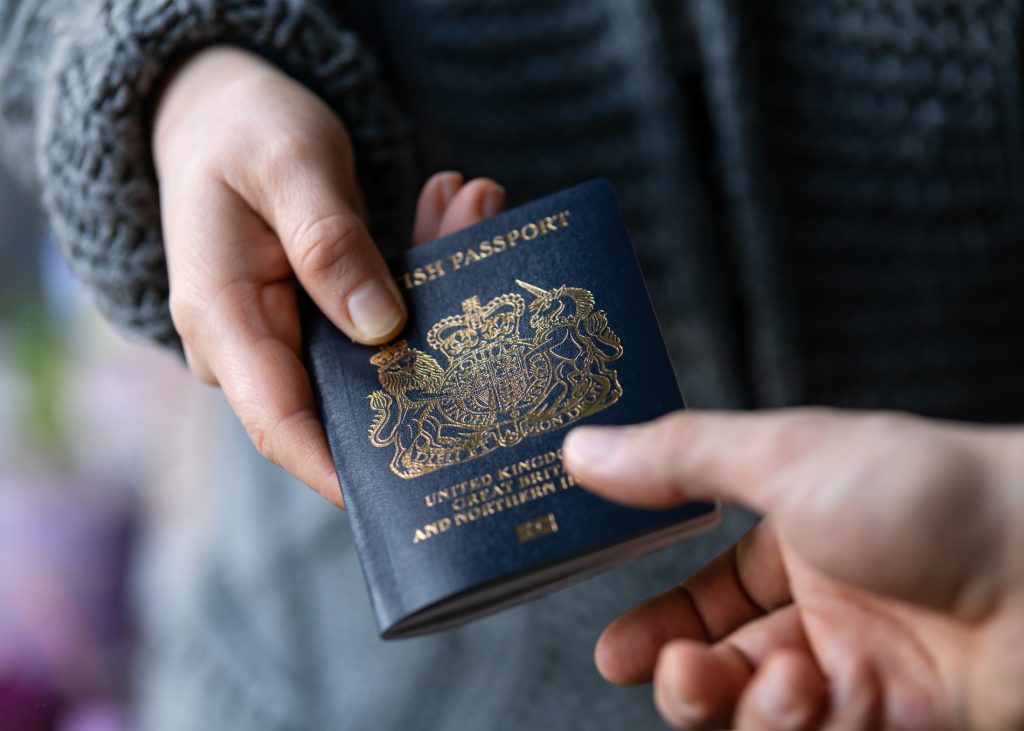
UK Passport Rule Changes: What Dual Nationals Need to Know
From 25 February 2026, British dual nationals must comply with new documentation requirements when entering the UK. Travelling on a foreign passport alone is no longer sufficient, and failure to present the correct documentation may result in denied boarding or delays at the border.
These changes form part of the UK government’s rollout of the Electronic Travel Authorisation (ETA) system. While primarily aimed at visa-free travellers, the new rules also directly affect British dual nationals, many of whom may be unaware of the updated requirements. For offshore professionals travelling frequently, understanding these changes is essential to avoid disruption to work schedules and rotations.
Who is affected?
The new rules apply to British citizens who hold dual nationality, with one key exception: individuals with British Irish dual nationality may continue to enter the UK using an Irish passport.
The changes are particularly relevant for dual nationals who:
- Live and work outside the UK
- Regularly travel using a non-UK passport
- Hold passports from visa-exempt countries such as the EU, United States, Canada, Australia, or Japan
According to UK census data, this affects an estimated 1.2 million dual nationals, meaning a significant number of offshore workers could be impacted.
What has changed?
Historically, some British dual nationals were able to enter the UK using only their foreign passport, particularly if it belonged to a visa-exempt country. While not formally encouraged, this practice was generally accepted at UK border control.
This is no longer the case. Under the new rules, British dual nationals are not permitted to enter the UK using only a foreign passport.
To travel to the UK, you must now present one of the following:
- A valid British passport
- A valid Irish passport (if you hold British Irish nationality)
- A Certificate of Entitlement to the Right of Abode
These checks are now being enforced by carriers (including airlines, ferry operators, and rail providers) before departure. This means you may be refused boarding before even reaching the UK border if your documentation is not in order.
Your documentation options:
-
UK Passport (Recommended)
- Cost: £94.50 (online adult application)
- Validity: 10 years (adult)
- Provides clear proof of British citizenship
- Allows access to UK e-gates
- Offers full consular support when travelling abroad
For most individuals, this is the simplest and most reliable option.
-
Certificate of Entitlement to the Right of Abode
- Cost: £589
- Confirms your right to live and work in the UK
- Linked to your foreign passport
This option may suit individuals who prefer to travel primarily on a non-UK passport. However, it is important to note:
- You cannot hold a certificate and a valid British passport at the same time
- Certificates are now issued digitally, rather than as physical stickers
- You must keep your UK Visas and Immigration (UKVI) account updated when renewing your passport
While valid indefinitely, the certificate must always be linked to your current passport details.
-
Emergency Travel Document
- Cost: £125
- Valid for a single journey only
This is a short-term solution for urgent travel and should not be relied upon for regular offshore rotations.
Why has this change been introduced?
The changes are part of the UK’s wider introduction of the Electronic Travel Authorisation (ETA) system. Under this system, travellers from visa-exempt countries must apply for pre-travel approval before entering the UK.
However, British citizens are not eligible to apply for an ETA. As a result, dual nationals must instead prove their British citizenship through the documentation outlined above.
The government has stated that these measures align the UK with countries such as the United States and Australia, where similar pre-travel authorisation systems are already in place.
Practical implications for offshore professionals
For those working in offshore roles, where travel is frequent and often time-sensitive, these changes have clear implications:
- Plan ahead: Ensure your documentation is valid well in advance of travel
- Avoid delays: Airlines may refuse boarding if requirements are not met
- Minimise risk: Last-minute issues could impact project start dates or crew changes
- Keep it simple: Travelling with a valid British passport remains the most straightforward option
Key takeaway
While the market continues to evolve, these rule changes are a practical reminder of how regulatory updates can directly impact offshore work.
If you are a British dual national, the safest approach is to travel with a valid British passport or ensure you hold the appropriate alternative documentation. Taking action now will help avoid unnecessary delays and ensure smooth travel to and from your assignments.
* Disclaimer: Nothing in this article constitutes legal advice. Specialist legal advice should be taken in relation to specific circumstances. The contents of this article are for general information purposes only. Whilst we endeavour to ensure that the information is correct, no warranty, express or implied, is given as to its accuracy and we do not accept any liability for error or omission.
Related News

Scientists Discover Over 1,000 New Ocean Species: What Does It Tell Us About the Seabed?
The ocean covers more than 70% of the Earth’s surface, yet much of what lies beneath it remains a mystery. In 2025,…

DEEP: The Company Building Deepwater Settlements for Human Habitation by 2027
What if the next frontier for human exploration isn’t space, but the ocean? That is the question behind DEEP, a UK-based ocean…