
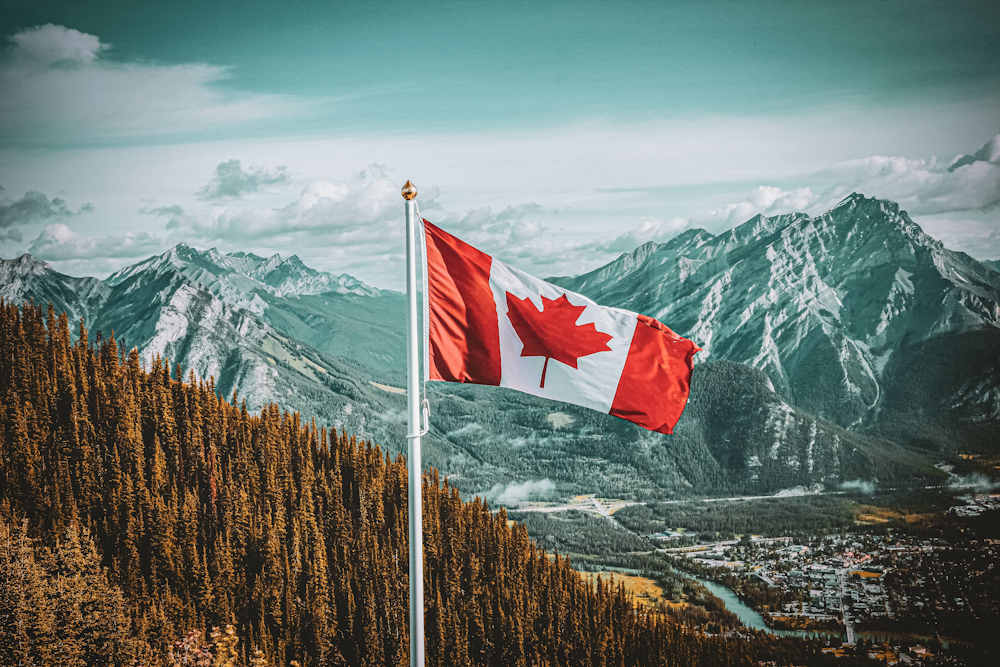
Canada’s Energy Strategy Is Shifting – Oil & Gas Is Back at the Centre
The global energy industry is subject to continual change, and recent developments in Canada illustrate how quickly national energy priorities can shift. Under the previous government of Justin Trudeau, Canadian climate policy placed a strong emphasis on decarbonisation, with commitments to reduce greenhouse gas emissions by 40-45 per cent below 2005 levels by 2030 and achieve net zero emissions by 2050.
The current Prime Minister, Mark Carney, has placed greater emphasis on energy security, economic growth and investment in oil and gas infrastructure, while maintaining Canada’s long-term net zero ambitions. Plans for a proposed 620-mile pipeline, at an estimated cost of up to C$44 billion, would connect Alberta’s oil sands to Canada’s west coast. The project is intended to expand crude oil exports to Asian markets, strengthen the country’s energy security, and reduce its reliance on the United States as an export destination.
Carney has acknowledged that expanding conventional oil and gas production presents emissions challenges but has argued that these can be mitigated through higher environmental standards and lower-carbon production methods. He stated: “Addressing energy security means we are going to produce our conventional oil and gas in the most environmentally sustainable ways and export them to where they will make the biggest difference.” While this represents a notable shift in emphasis compared with his previous role as Governor of the Bank of England between 2013 and 2020 – where he became a prominent advocate for aligning finance with net zero objectives – Carney maintains that Canada’s climate ambitions and energy security objectives can be pursued simultaneously.
This renewed policy direction is also beginning to influence corporate investment decisions, with Shell providing the clearest example through its agreement to acquire ARC Resources in a transaction valued at approximately US$16.4 billion (around C$22 billion including assumed debt). Subject to regulatory approvals, the acquisition is expected to complete during the second half of 2026.
The acquisition is projected to increase Shell’s production by approximately 370,000 barrels of oil equivalent per day and is expected to create further opportunities to enhance the value of Shell’s liquefied natural gas (LNG) business through its existing global gas infrastructure. The transaction will combine ARC Resources’ operations, comprising more than 1.5 million net acres, with Shell’s existing Canadian portfolio of 440,000 net acres. Together, the combined portfolios are estimated to hold close to two billion barrels of oil equivalent in proved and probable reserves.
Moreover, Shell’s acquisition may not be an isolated development. Industry commentators have fuelled speculation that companies including TotalEnergies, Equinor, ConocoPhillips and BP could be reassessing further opportunities in Canada, reflecting growing confidence in one of the world’s most significant oil and gas-producing regions. If realised, this would represent a notable shift from the longer-term trend in which many international oil companies redirected capital away from Canada’s oil sands towards jurisdictions offering lower development costs and comparatively lighter regulatory regimes.
Whether this renewed confidence translates into sustained long-term investment remains to be seen. However, it highlights how quickly sentiment within the energy sector can change and how geopolitical, economic and energy security considerations continue to influence investment decisions. For offshore professionals, Canada is a market worth monitoring. While current developments are primarily focused on strengthening onshore production and export capacity, increased confidence in the country’s wider energy sector could influence future project activity across the industry, including offshore developments.
Related News

Scientists Discover Over 1,000 New Ocean Species: What Does It Tell Us About the Seabed?
The ocean covers more than 70% of the Earth’s surface, yet much of what lies beneath it remains a mystery. In 2025,…
DEEP: The Company Building Deepwater Settlements for Human Habitation by 2027
What if the next frontier for human exploration isn’t space, but the ocean? That is the question behind DEEP, a UK-based ocean…