
Offshore Career Path Explained: Exploring Careers in ROV
Remotely operated vehicles (ROVs) have become one of the most important technologies in the offshore industry. From inspecting subsea infrastructure to supporting complex construction and intervention campaigns, ROVs make it possible to carry out work in environments that are too deep, hazardous, or inaccessible for divers.
When people think of a career in ROVs, they often picture someone driving a subsea robot with a joystick. ROV pilots are an important part of the industry, but in reality, the sector offers a much broader range of careers, spanning engineering, maintenance, project management, and emerging autonomous technologies, among others.
This article provides an overview of the principal career pathways available within the ROV industry, along with the skills, qualifications, and progression routes associated with them.
What is a ROV?
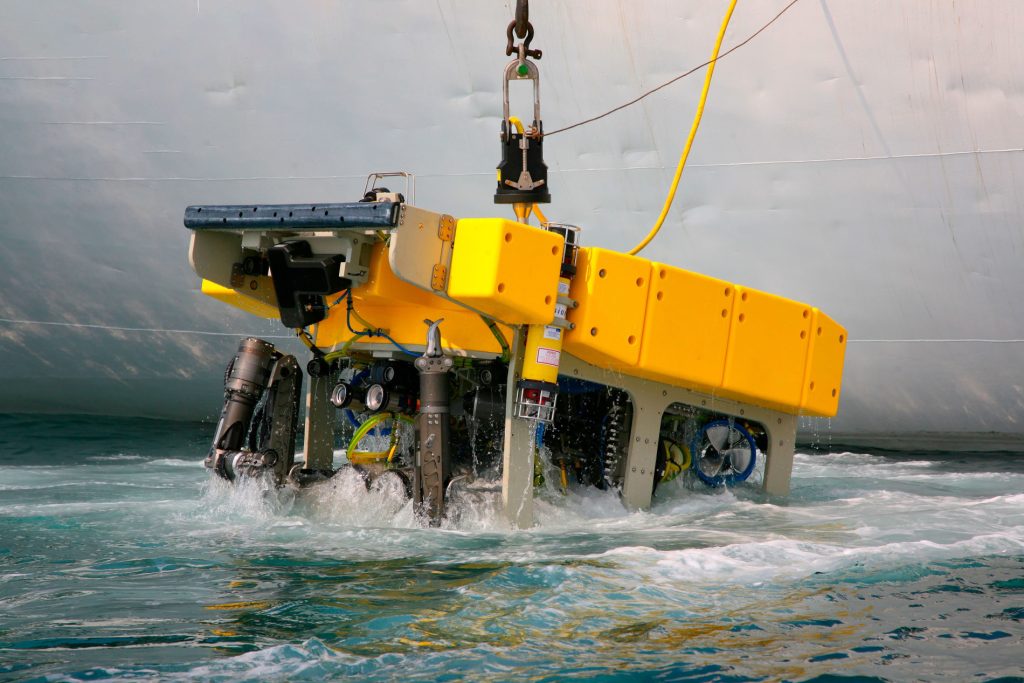
An ROV is an underwater robotic system, typically tethered to a surface vessel or offshore installation by an umbilical cable that transmits power, control signals, and data – though some small observation-class systems are free-swimming and operate without a tether.
ROVs vary considerably in size and capability:
Smaller ‘inspection’ or ‘eyeball’ systems can be the size of a laptop or briefcase, while full work-class ROV systems can be as large as a transit van. These larger systems operate with high-voltage power supplies (typically around 3,500–4,000 volts) and advanced hydraulic systems reaching pressures of 200–300 bar. They are also equipped with highly advanced robotic arms, which are often one of the most visually striking and recognizable features of the technology.
The Structure of an ROV Team
A typical offshore work-class ROV spread is operated by a team working rotational shifts, often with three personnel per shift. The exact structure varies by company and project, but most teams include the following functions.
ROV Pilot/Technician
This is the role most commonly associated with the industry.
Key responsibilities
- Piloting the ROV during inspection, survey, and construction operations.
- Operating manipulators and subsea tooling.
- Performing maintenance, troubleshooting, and repairs.
- Monitoring vehicle performance and safety systems.
- Supporting launch and recovery operations.
Importantly, successful pilot techs are not simply vehicle operators; they are also technicians capable of diagnosing and repairing complex electrical, hydraulic, and mechanical systems offshore.
ROV Supervisor
Key responsibilities
- Leading the ROV crew.
- Coordinating operations with the client and vessel management.
- Ensuring compliance with procedures and safety requirements.
- Managing operational planning and reporting.
- Mentoring junior personnel.
Supervisors are accountable for the safe and effective execution of ROV operations during a project.
ROV Superintendent
Key responsibilities
- Providing technical and operational oversight across one or more projects, vessels or ROV systems.
- Managing personnel, certification, and equipment readiness.
- Supporting project delivery and client relationships.
- Providing strategic operational oversight.
This is typically a senior leadership position reached after substantial offshore experience.
ROV Subsea Engineer (Sub Engineer)
Key responsibilities
- Maintaining the technical integrity of the ROV system.
- Conducting diagnostics and fault-finding.
- Managing repairs and component replacement.
- Supporting upgrades, testing, and commissioning activities.
These roles are particularly attractive to candidates with strong electrical, electronic, hydraulic, or mechanical backgrounds.
Beyond the Traditional ROV Roles
The subsea sector increasingly overlaps with autonomous and remote operations, creating additional career opportunities.
Emerging and Adjacent Roles Include:
AUV Operator / Supervisor: Operating Autonomous Underwater Vehicles used for seabed mapping, survey, and data acquisition.
USV Operator: Managing Uncrewed Surface Vessels that support survey, inspection, and remote operations.
ROTV Pilot: Operating remotely operated towed vehicles used in specialized survey applications.
Offshore Project Manager: Coordinating personnel, equipment, vessel schedules, and client deliverables across subsea projects.
ROV Systems Engineer: Designing, modifying, and optimizing ROV systems, tooling, and control architectures.
As offshore operations become more automated, experience with remote operations centres, digital monitoring systems, and autonomous platforms is becoming increasingly valuable.
Common Routes into the Industry
There is no single route into a ROV career. However, the most common path we see is someone with vocational experience in a technical discipline who then secures a trainee position with one of the larger operators.
Typical entry pathways include:
- Vocational or trade backgrounds – electricians, instrumentation technicians, hydraulic technicians, mechanics, and similar trades often transition successfully into trainee ROV roles.
- Engineering degrees – electrical, electronic, mechanical, mechatronic, robotics, or marine engineering qualifications provide a strong foundation for technical and engineering-focused positions.
- Apprenticeships – several offshore employers combine classroom learning with subsea simulation and practical experience.
- Specialist ROV training courses – useful for exposure to piloting and system fundamentals, though most operators still require candidates to build operational experience through a trainee position before working independently.
In practice, employers tend to weigh technical competence, problem-solving ability, and offshore aptitude more heavily than any one academic pathway.
As a specialist offshore recruiter, we see that candidates who complete introductory courses alone still lack the operational and project experience needed to work as a contractor – a trainee position within a company remains the route to that first staff job. From there, once you’ve built up genuine offshore experience, going freelance through a company like Precise Consultants becomes a realistic next step.
Skills That Matter Most
Regardless of role, successful ROV professionals typically combine several core capabilities:
- Technical grounding in electronics, hydraulics, robotics, and mechanical systems
- Comfort with ROV navigation and data-management software
- Precise vehicle handling, especially for delicate subsea tasks
- Sound judgement under pressure in low-visibility, high-risk conditions
- Physical/mental resilience and a strong safety mindset (including weather assessment for launches)
Qualifications and Certifications
Common offshore requirements
- Offshore survival training (BOSIET, FOET and sometimes HUET where required)
- Offshore medical certification (OEUK)
- Basic technical qualifications in a relevant discipline
ROV-specific credentials
- IMCA competence schemes and logbook progression used by many offshore employers.
- Manufacturer-specific training (for example, Saab Seaeye, Oceaneering, and other major systems)
- Tooling and intervention equipment training
- Simulation-based operational training
Career Progression
Although individual pathways differ, a common progression is:
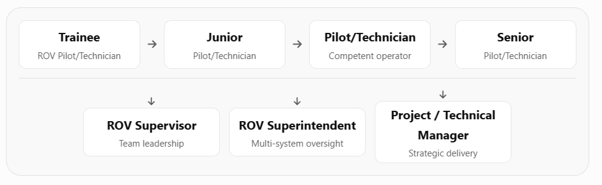
Parallel technical pathways also exist for maintenance specialists and ROV engineers who may move into engineering management or technical authority roles.
Salary Expectations
Compensation varies significantly by region, employer, vessel type, and rotation pattern. As a broad indication, offshore ROV careers are generally well-compensated relative to many engineering and technical occupations, with experienced pilots, supervisors, superintendents, and specialist engineers often commanding premium rates in markets such as the North Sea and Norwegian sector.
Rather than focusing on headline figures, candidates should evaluate:
- Day rate versus salaried structure
- Rotation pattern
- Travel and accommodation arrangements
- Training and career development support
- Long-term progression opportunities
Conclusion
ROV careers span far more than piloting – hands-on technicians, engineers, and supervisors are equally central to the work. The clearest way in is building a technical foundation and securing a trainee role with an established operator to gain supervised, logged experience. From there, progressing through the industry’s IMCA-based competence framework and building a track record in your chosen ROV role opens the door to freelance/contract work, which forms the backbone of project-based demand across the sector.
At Precise Consultants, we specialise in placing experienced freelance ROV professionals with clients rather than recruiting for permanent staff positions – so once you’ve got that trainee foundation and some hours behind you, we’re a good next step for finding contract opportunities.
Roles We Hire at Precise
- AUV Operator
- AUV Supervisor
- Offshore Project Manager
- ROTV Pilot
- ROV Pilot/Technician Grade 1
- ROV Pilot/Technician Grade 2
- ROV Supervisor
- ROV Superintendent
- Senior ROV Piltot/Technician
- ROV Sub Eng
- USV Operator
Related News
Taiwan’s Offshore Wind Growth Shows No Signs of Slowing
Taiwan has officially become the world’s fifth-largest offshore wind market, generating more than 10 billion kWh of electricity last year…

Canada’s Energy Strategy Is Shifting – Oil & Gas Is Back at the Centre
The global energy industry is subject to continual change, and recent developments in Canada illustrate how quickly national energy priorities…