
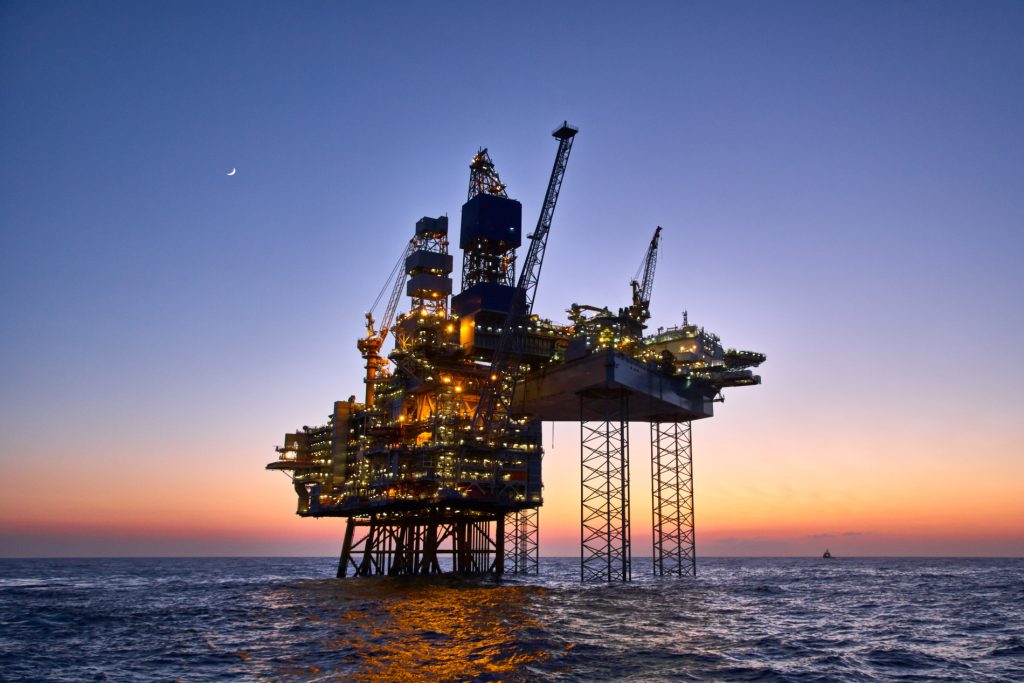
The UK North Sea: Running Out of Oil & Gas or Running Out of Time?
One of the most persistent debates surrounding the UK North Sea concerns its future. Put simply, is the basin running out of oil and gas, or is the UK running out of time to make use of the resources that remain?
The answer is more complex than either argument suggests. While production has declined significantly over recent decades, this does not necessarily mean that the basin is physically exhausted. To understand where the North Sea is heading, it is important to consider its history, the resources that remain and the economic and policy conditions affecting future investment.
A Forgotten History
It is easy to forget that, not so long ago, the UK was one of the world’s largest oil producers. The country’s oil and gas production boom began in the 1960s following significant discoveries in the North Sea. By 1986, the UK was the world’s fifth-largest crude oil producer, behind Mexico and ahead of Iran and Iraq. Even at the turn of the millennium, the UK remained among the world’s top ten oil producers, with production reaching its peak in 1999.
Today, however, the North Sea is often characterised as an industry in terminal decline. Parliamentary records show that production fell by 72% between 1999 and 2023, contributing to the UK’s increasing reliance on imported energy. The UK has been a net importer of oil since 2005, apart from 2020, and a net importer of gas since 2004.
Yet the North Sea continues to play an important role in the UK’s energy system. In 2024, North Sea gas alone met almost half of the UK’s overall gas demand.
This decline in production has contributed to a common assumption: if output is falling, the resources must be running out. However, the reality is more complicated.
A Mature Basin Does Not Mean an Empty Basin
The UK North Sea is considered a mature basin. This does not mean that there is no oil or gas remaining, nor that new discoveries are impossible. Rather, decades of exploration, drilling and geological study mean that the basin is relatively well understood, while many of the larger and more straightforward resources have already been developed.
Some of the remaining oil and gas is comparatively accessible, particularly where it is located close to existing pipelines and other infrastructure. Other resources are considerably more challenging to develop, requiring greater investment, more complex technology or additional infrastructure.
Whether these resources are developed therefore depends on more than their physical presence. Oil and gas prices, taxation, regulation, development costs and the availability of infrastructure all influence whether a project is commercially viable.
The debate is therefore less about whether oil and gas remain beneath the North Sea and more about whether the economic conditions exist to justify extracting them.
What Do the Numbers Actually Say?
The decline in UK North Sea production is undeniable. However, describing the basin as exhausted does not accurately reflect the available data.
At the end of 2024, the UK’s proven and probable oil and gas reserves were estimated at approximately 2.9 billion barrels of oil equivalent (boe). The North Sea Transition Authority estimates the total remaining resource at around 3.75 billion boe, although only a proportion of this (14%) is considered commercially viable for extraction.
This distinction between resources and commercially recoverable reserves is important. Oil and gas can remain underground without being economically viable to extract under current conditions. The more technically challenging or geographically remote a resource is, the greater the investment required to bring it to market.
The evidence therefore suggests that the UK’s North Sea cannot be characterised simply as running out of oil and gas. Instead, production is increasingly shaped by the economic and technical challenges associated with developing what remains.
Taxation and Investment
Taxation and fiscal uncertainty are also frequently cited by industry as factors affecting investment in the UK North Sea. Operators currently face a complex upstream tax regime comprising Ring Fence Corporation Tax at 30%, the Supplementary Charge at 10% and the Energy Profits Levy at 38%. Introduced in May 2022 at 25%, the Energy Profits Levy was designed to capture exceptional profits following the surge in energy prices and has since been increased twice.
While the level of taxation is a key concern for the industry, fiscal uncertainty can also make long-term investment decisions more difficult. This is particularly relevant in a mature basin, where remaining projects can involve higher development costs and greater technical challenges, making the commercial viability of individual projects increasingly important.
Industry bodies argue that this uncertainty has contributed to weaker investment and exploration activity.
BP’s North Sea Exit
The changing investment environment can also be seen in the decisions being made by major operators. On 31 July, BP announced plans to sell its UK North Sea business after more than 60 years of operations in the region.
The decision forms part of a wider strategy to focus investment on higher-return projects, against a backdrop of high UK taxation and the ongoing challenges associated with operating in a mature basin.
Industry confidence also remains weak. The Aberdeen & Grampian Chamber of Commerce’s 2026 survey recorded a net balance of -68 for business confidence in the UK North Sea, compared with +58 for confidence in international markets.
These figures highlight the wider uncertainty facing businesses operating within the region.
So Why Is Norway Still Developing the North Sea?
Norway provides an interesting comparison. The country has made major discoveries in recent years, including a field in the Yggdrasil area that could yield 134 million barrels of oil, marking one of the largest North Sea finds in a decade.
So why does Norway continue to develop new North Sea resources while UK activity is declining?
One factor highlighted by OEUK is the importance of continued investment and licensing in a mature basin. As existing fields decline, ongoing exploration and development can help replace some of the resources being produced and slow the overall rate of decline.
This can be illustrated through the reserves replacement ratio, which measures how much new resource is added compared with the amount produced. Between 2019 and 2024, Norway replaced an average of 46% of the reserves it produced through exploration, while the UK replaced just 14%.
Licensing does not, of course, result in immediate production. Its purpose is to provide a pipeline of future projects and resources. In a mature basin, continued activity can therefore help manage decline over the longer term.
The UK’s challenge is that without sufficient exploration, licensing and investment, domestic production may decline more quickly, increasing reliance on imported energy even if overall demand also falls.
Conclusion
The evidence suggests that the UK’s declining North Sea production cannot be explained simply by a lack of remaining oil and gas. Significant resources remain, but developing them is becoming more technically and economically challenging.
Political and fiscal policy, alongside the increasing cost and complexity of extracting what remains, are therefore important factors in determining the future of North Sea production.
The real question is not simply whether the oil and gas are still there, but whether the UK has the time, investment and policy conditions required to make use of what remains.
Related News

Scientists Discover Over 1,000 New Ocean Species: What Does It Tell Us About the Seabed?
The ocean covers more than 70% of the Earth’s surface, yet much of what lies beneath it remains a mystery. In 2025,…

DEEP: The Company Building Deepwater Settlements for Human Habitation by 2027
What if the next frontier for human exploration isn’t space, but the ocean? That is the question behind DEEP, a UK-based ocean…