
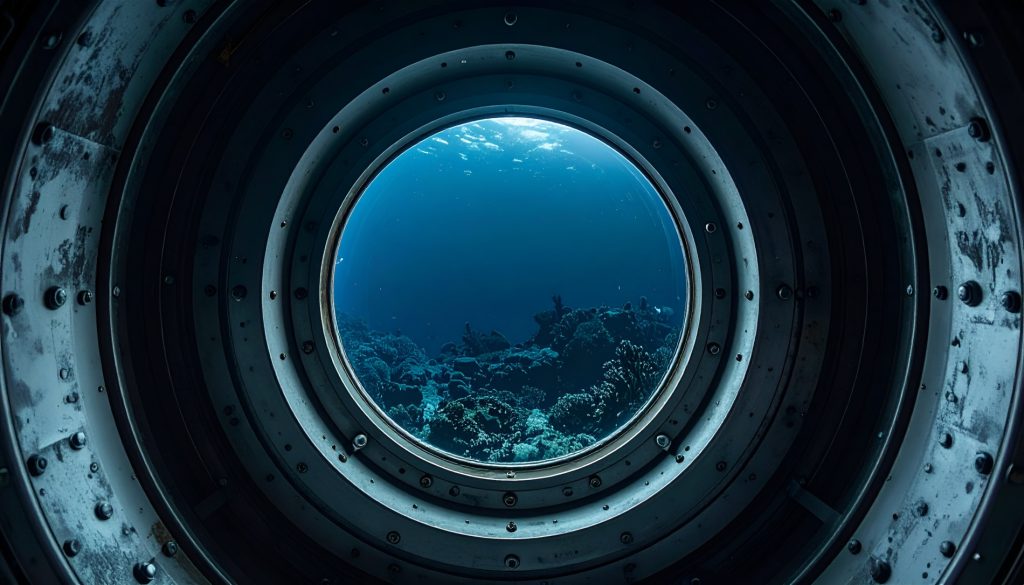
DEEP: The Company Building Deepwater Settlements for Human Habitation by 2027
What if the next frontier for human exploration isn’t space, but the ocean?
That is the question behind DEEP, a UK-based ocean engineering company developing technology designed to allow people to live and work beneath the surface for extended periods. Its ambition is not simply to send people underwater; it is to create a new form of subsea infrastructure that could give scientists, researchers and other specialists sustained access to parts of the ocean that are difficult to study from the surface.
Funded by an anonymous ultra rich investor who has committed hundreds of millions of pounds to advance oceanic research. DEEP’s UK campus is based near Chepstow, on the site of a former limestone quarry. The facility includes a 600-metre-long freshwater lake reaching depths of up to 80 metres, providing a controlled environment for underwater training, testing and development.
DEEP is working on two habitats: the Vanguard, a smaller module for four people on short-term stays under the sea; and the Sentinel, a 16m (52ft) capsule that they hope will serve as a longer-term habitat – complete with living spaces, bedrooms and research facilities – and can house researchers at depths of up to 200m (656ft) for 28 days at a time
Meet Vanguard
DEEP’s first habitat, Vanguard, has now been deployed at Tennessee Reef in the Florida Keys National Marine Sanctuary. Designed for a crew of four, Vanguard is built for short terms stays and provides a dry living environment for missions of five days or more, allowing researchers and divers to remain underwater without repeatedly returning to the surface.
Meet Sentinel
But the one which gets people most excited is Sentinel. The Sentinel, a 16m (52ft) capsule that they hope will serve as a longer-term habitat – complete with living spaces, bedrooms and research facilities; can house multiple researchers at depths of up to 200m (656ft) for 28 days at a time. Though the hope is that this could one day be extended to months … and beyond. The basic sentinel houses up to six people, but the idea is that multiple sentinels could be attached to potentially form multi-nation, multi-purpose research stations
The main benefit of DEEP’s Sentinel subsea habitat system is that it can be configured together in a variety of combinations to form a system. The system is designed to be modular, allowing for different configurations to meet changing needs and locations. The components can be re-configured and re-located at depth, making the system adaptable for various missions and tasks. This modularity is key to the Sentinel’s flexibility and re-deployability, allowing it to be tailored to specific tasks and re-configured between missions without the need to recover to the surface.
The challenges ahead
While this all may sound promising bringing the concept to life won’t be simple. At the moment, DEEP’s testing is confined to a controlled 260-foot-deep lake, a far cry from open-water conditions. Taking the project into the ocean brings a host of new variables into play, from severe weather to unpredictable encounters with marine life or passing vessels. Then there’s the shadow of the OceanGate Titan disaster, the submersible that imploded in 2023, killing all five people aboard. DEEP maintains that its approach differs, pointing to its close collaboration with Det Norske Veritas (DNV), an international accreditation body, to ensure both its submersible and underwater habitats meet safety standards. Even so, no amount of planning fully tames the unpredictability of the ocean!
Conclusion
The question remains: could DEEP really be the first to establish a permanent human presence beneath the ocean? If it succeeds, we could see researchers living and working underwater for extended stretches, opening up a new frontier in oceanic research, one that might finally capture the imagination the way space exploration has for decades. Everything about DEEP, from the campus and the scale of its underwater accommodation to the food and its anticipated clientele, seems designed to push past what’s come before. Yet one thing remains beyond anyone’s control: there’s simply no telling what the ocean depths have in store for those who make their home there.
Related News
Scientists Discover Over 1,000 New Ocean Species: What Does It Tell Us About the Seabed?
The ocean covers more than 70% of the Earth’s surface, yet much of what lies beneath it remains a mystery. In 2025,…
Poland’s First-Ever Offshore Wind Farm, Baltic Power, Has Been Switched On
Located 23 kilometres off the northern coast near Choczewo and Łeba, Poland’s first-ever offshore wind farm, Baltic Power, has now delivered its first…