
The UK Offshore Wind Paradox: Record Output Yet Rising Uncertainty
The UK offshore wind industry is producing more electricity than ever.
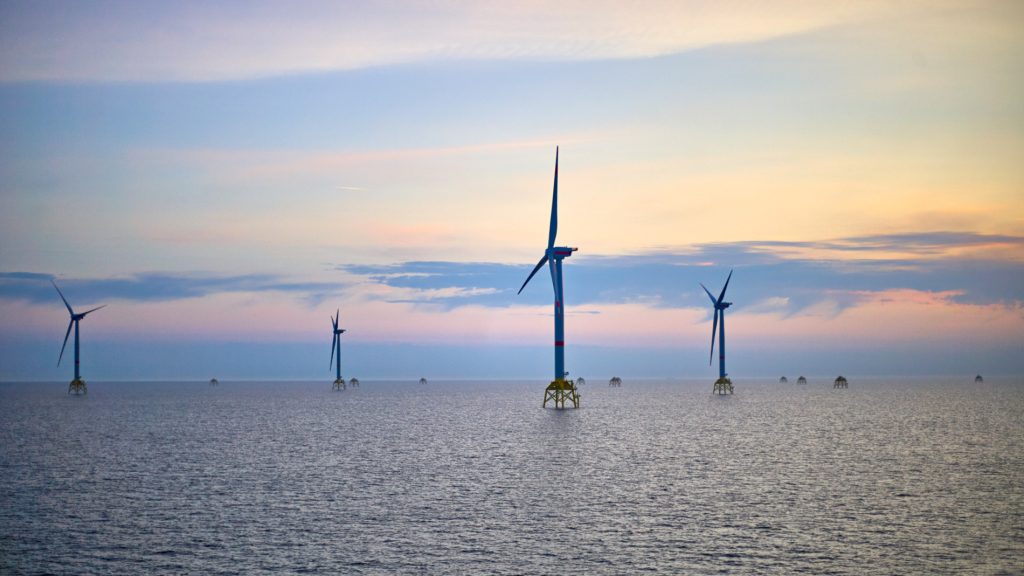
In 2025, offshore wind generated a record 52 TWh, displacing 20.8 million tonnes of CO2 and supplying 19% of the country’s total electricity. The sector has grown from just two turbines 25 years ago to almost 3,000 fully commissioned turbines. On the surface, these figures suggest a sector moving firmly in one direction: growth. Yet, alongside record generation, we are seeing growing uncertainty as macro-economic pressures have contributed to the cancellation, delay and restructuring of various offshore wind projects across the UK. Which leaves one question: why is there growing uncertainty despite a growth in output across the industry?
An Increase in Volatility
A clear example is the Norfolk Offshore Wind Zone, which originally comprised three projects developed by Vattenfall: Norfolk Boreas, Norfolk Vanguard East and Norfolk Vanguard West. Each project was planned at 1.4 GW, while the three projects together expected to generate enough electricity to power more than 4 million UK homes.
Although, in 2023, Vattenfall halted development of Norfolk Boreas, citing a significant increase in project costs and difficult market conditions. Rather than disappearing from the pipeline altogether, the wider Norfolk portfolio was subsequently sold to RWE in a deal completed in March 2024, allowing the Vanguard projects to continue progressing. Offshore construction is currently expected to begin in early 2027.
A similar pattern emerged with Ørsted’s Hornsea 4, a 2.4 GW project capable pf powering 2.6 million homes. In 2025, Ørsted announced that it would discontinue the project in its existing form, citing poor economics and increased execution risk. The project had already secured a Contract for Difference, demonstrating that even government-backed revenue support cannot completely remove the commercial risks involved in developing large offshore wind projects.
In both cases, the story is more complex than a simple cancellation. Projects can be paused, restructured or transferred as market conditions change, making the journey from development to construction increasingly uncertain and difficult to predict.
So Why Did the Economics Change so Dramatically?
Well, it comes as no surprise that the offshore wind industry is exposed to fluctuations in the prices of raw materials. Building a wind turbine requires significant amounts of steel, copper and aluminium, all of which have doubled or tripled in price in recent years. Turbine manufacturers have thus raised prices in an effort to recover recent losses. This affects the profitability forecasts of wind energy developers like Vattenfall and the viability of each of their projects.
Furthermore, the price for rare earth metals used to make magnets in turbine generators is also rising. The International Energy Agency projects that demand for rare earth magnets could double by 2035, leading to a further rise in price. The mining, processing and refining of these metals is dominated by China which has also led to supply chain challenges.
This coupled with the rise in inflation caused by the pandemic and the war in Ukraine and the Middle East are just a few of the many reasons why Wind Farms are becoming increasingly challenging to build and are becoming financially unviable for many companies.
Despite these challenges, the UK government still aims to generate at least 43GW of offshore wind power (current capacity is 14.7GW) and 95% of all energy from renewable sources by 2030. However, if something does not change to mitigate costs and increase returns for developers, the government’s 2030 target is in doubt.
Contracts for Difference
Contracts for Difference are also playing an important part in the uncertainty surrounding new offshore wind projects, as the strike price offered through each allocation round must reflect the cost of developing a project in a changing market.
Most UK offshore wind projects are supported through Contracts for Difference (CfDs), where a developer bids for a guaranteed “strike price” per megawatt-hour through competitive allocation rounds. The Government tops up the difference if wholesale prices fall below the strike price, and claws back the surplus if prices rise above it, giving developers greater revenue certainty while shielding consumers from some wholesale price volatility.
However, the mechanism only works if the strike price reflects the economics of developing a project, and 2023 provided a clear example of what can happen when it does not. In the UK, the 2023 auction (Allocation Round 5) failed to attract a single bid for fixed-bottom offshore wind. Developers argued that the £44/MWh strike price was no longer viable under prevailing cost conditions. The UK Government responded by raising the price ceiling by 66% for the 2024 allocation round, which subsequently awarded 4.9 GW of new offshore wind capacity.
The Tables Have Turned
These examples mark a shift from just a few years ago, when developers competed intensively for opportunities through increasingly competitive auctions. Today, developers are becoming more selective, driven by greater capital discipline and closer scrutiny of project economics. The balance has shifted, with governments needing to ensure that the support offered is sufficient to attract investment while developers assess whether projects offer an acceptable return. This makes the strike price a key factor in offshore wind economics, as it is influenced by changing construction costs, financing conditions, supply-chain pressures and wider market conditions.
Conclusion
The UK offshore wind market is not shrinking. It is producing record levels of electricity, new projects continue to secure government support and the UK remains committed to significantly expanding offshore wind capacity. But the path from project announcement to offshore construction is becoming more complex. The Norfolk Offshore Wind Zone and Hornsea 4 both demonstrate how quickly rising costs and market conditions can change the economics of a project. They also show that a project being paused, restructured or transferred does not necessarily mean the opportunity disappears permanently. That is the paradox at the heart of the UK offshore wind market: the industry is growing, but growth does not eliminate uncertainty. For freelancers, the important question is therefore not simply whether offshore wind is expanding, but which projects are progressing, who is developing them, what stage they have reached and what economic conditions could affect their timelines. Understanding that bigger picture can provide a clearer view of where opportunities may emerge as the UK continues its transition towards a low-carbon energy system.
Related News
“I’ve Been Made Redundant from an Offshore Staff Role – What Are My Options?”
Being made redundant from a permanent offshore role is disruptive and unsettling, especially when it’s a career you’ve built over…

How Starlink Has Changed the Offshore Landscape
For decades, going offshore meant accepting a degree of digital absence. In the days before reliable offshore connectivity, workers would…