
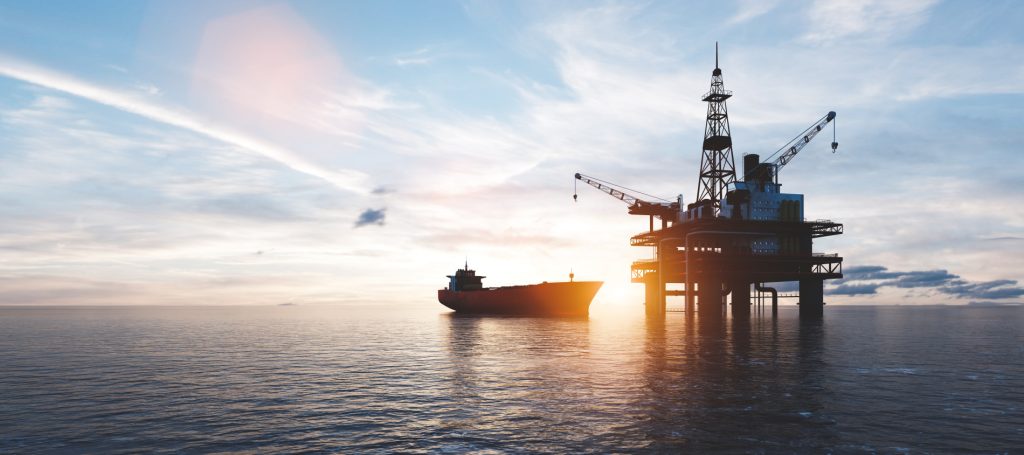
The World’s Newest Oil Frontier: South America’s Oil & Gas Boom
South America is rapidly emerging as one of the most dynamic regions in the global oil and gas industry. From Argentina’s shale renaissance to Guyana’s offshore discoveries and Brazil’s ultra-deepwater expansion, the continent is experiencing a production surge that is reshaping global energy supply.
For offshore professionals and technical freelancers, this growth represents more than a macroeconomic trend. It signals a widening pipeline of exploration, development and production projects that will require specialist offshore expertise across drilling, subsea engineering, project management, inspection and marine operations.
With several large-scale developments scheduled throughout the remainder of the decade, South America is increasingly being viewed as one of the world’s most significant emerging energy frontiers.
Argentina: The Vaca Muerta Shale Revolution
When we talk about South America’s oil and gas boom, we can’t not speak about Argentina’s Vaca Muerta formation which is redefining the country’s energy outlook. Located in the Neuquén Basin and spanning 30,000 square kilometres, this vast shale play has become one of the largest unconventional oil and gas resources outside North America.
Production growth over the past decade has been substantial. Crude oil output reached a record 861,380 barrels per day in December 2025, up 14% year-on-year, and nearly double the 494,721 barrels per day recorded in December 2015. This rapid expansion reflects the successful adoption of advanced shale extraction techniques, positioning Argentina as a rising player in global oil markets.
Natural gas output has also increased. In December 2025, production reached 4.6 billion cubic feet per day, up 7.4% from the previous month and 5.7% higher year-on-year, although still below the record 5.7 billion cubic feet per day reached in July 2026; output remains strong and plays a crucial role in reducing reliance on imports and improving energy security.
Looking ahead, industry forecasts suggest that Vaca Muerta could produce around 1 million barrels per day by 2030, potentially positioning Argentina alongside major US shale basins such as the Bakken and Eagle Ford. If development proceeds without major constraints, the formation could generate up to $30 billion in annual energy exports by the end of the decade.
However, growth is not without challenges. Operators continue to face constraints related to rig availability; infrastructure bottlenecks and the technical learning curve associated with large-scale shale development. Despite these hurdles, the basin’s trajectory remains strongly positive, and Vaca Muerta is expected to remain a key focus for investment and technical expertise in the years ahead.
Guyana: The World’s Fastest Growing Oil Producer
Few energy stories have been as dramatic as the transformation of Guyana, the third-smallest country in South America but a nation that has rapidly become one of the most important new players in the global oil market.
With oil revenues jumping from $1.62 billion in 2023 to $2.57 billion in 2024, Guyana is projected to produce more oil than Argentina by 2028.
The turning point came in 2015, all thanks to ExxonMobil’s vast discoveries of offshore reserves in the Stabroek Block, located approximately 120 miles off Guyana’s coast.
This 2015 oil discovery transformed Guyana into the world’s fastest-expanding economy with lasting economic impact. Since 2022, Guyana’s real GDP growth has averaged roughly 47% per year, with Guyana now becoming the world’s largest oil producer on a per capita basis.
As of late 2025, Guyana was producing roughly 900,000 barrels per day, with capacity projected to reach around 1.7 million barrels per day by 2030. Although this is not all as further expansion is already underway. The Whiptail project, approved in April 2024, is expected to begin production in 2027 and add 250,000 barrels per day of capacity. For offshore professionals, the continued rollout of FPSOs, subsea infrastructure and drilling campaigns means Guyana will remain a major hub for offshore work well into the next decade.
Brazil: A Deepwater Superpower
While Guyana holds the title of the world’s fastest growing oil producer, Brazil consistently holds the title of the biggest oil producer in South America.
This is largely due to the country possessing the largest ultra-deepwater oil reserves globally, with offshore fields accounting for 95% of Brazil’s oil production. Much of this output comes from the prolific pre-salt region, where hydrocarbons are trapped beneath thick layers of ancient salt formations. These fields now generate more than 75% of the country’s total production.
Brazil’s production momentum has been remarkable. In October 2025, national oil output reached 4.03 million barrels per day, the first time the country surpassed the 4 million bpd threshold. This represented an increase of over 23% compared with the previous year, firmly placing Brazil among the world’s major oil producers.
Exploration success continues to extend the country’s project pipeline. Recent discoveries such as BP’s Bumerangue find in the Santos Basin (the company’s largest discovery in 25 years) highlight the ongoing potential of Brazil’s offshore basins. At the same time, emerging exploration areas such as the Pelotas Basin, which shares geological similarities with Namibia’s highly productive Orange Basin, are attracting increasing industry attention.
Brazil is also expanding its natural gas production. In 2025, the country achieved a record average gas output of 179 million cubic metres per day, a 17% increase year-on-year. The FPSO Guanabara in the Mero field recorded the highest output, producing 12.10 million cubic metres per day.
For offshore contractors, Brazil’s long-term development pipeline – spanning drilling campaigns, FPSO deployments, subsea systems and pipeline infrastructure, continues to generate substantial demand for specialist skills.
Suriname: One to Watch Closely
Neighbouring Suriname is increasingly viewed as the next potential offshore growth story in South America. While the country already produces oil onshore, it is preparing for large-scale offshore production, with first major output expected in 2028.
A key milestone came when TotalEnergies approved the $10.5 billion GranMorgu development offshore Suriname. The project targets the Sapakara and Krabdagu discoveries in Block 58 and includes the construction of a floating production storage and offloading (FPSO) vessel capable of processing around 220,000 barrels of oil per day. Designed to support future subsea tiebacks, the project is estimated to contain more than 750 million barrels of recoverable oil reserves, with first oil expected in 2028
Exploration success is also continuing in Petronas’ Block 52, where discoveries at Sloanea, Roystonea and Fusaea suggest wider commercial potential. Petronas is progressing plans for gas development, with first gas from Sloanea expected by around 2030.
While exploration risks remain, these developments could see Suriname producing more than 200,000 barrels per day by the end of the decade, positioning it as an emerging offshore hub in the region.
A Growing Opportunity for Offshore Professionals
Taken together, these developments point to a clear trend: South America is becoming one of the most important growth regions in the global offshore industry.
Brazil’s deepwater dominance, Guyana’s rapidly expanding FPSO fleet, Argentina’s shale boom and Suriname’s upcoming offshore developments are collectively driving a new wave of investment and project activity. For offshore freelancers and contractors, this translates into a strong pipeline of work.
As the global energy industry continues to evolve, South America’s combination of vast resources, major discoveries and ambitious development plans ensures the region will remain firmly in the spotlight for years to come.
Related News
Scientists Discover Over 1,000 New Ocean Species: What Does It Tell Us About the Seabed?
The ocean covers more than 70% of the Earth’s surface, yet much of what lies beneath it remains a mystery. In 2025,…
DEEP: The Company Building Deepwater Settlements for Human Habitation by 2027
What if the next frontier for human exploration isn’t space, but the ocean? That is the question behind DEEP, a UK-based ocean…