
Why Interconnector Projects Will Drive More Geophysical & UXO Work in Europe
Across the offshore market, you may have noticed a slowdown in activity in relation to geophysical work in 2026. With fewer surveys happening, there are more geoscience specialists actively seeking work. While this reflects a quieter period in the project cycle, it is important to recognise that this is not a long-term decline, but rather a pause before the next wave of major developments.
The Hamburg Declaration
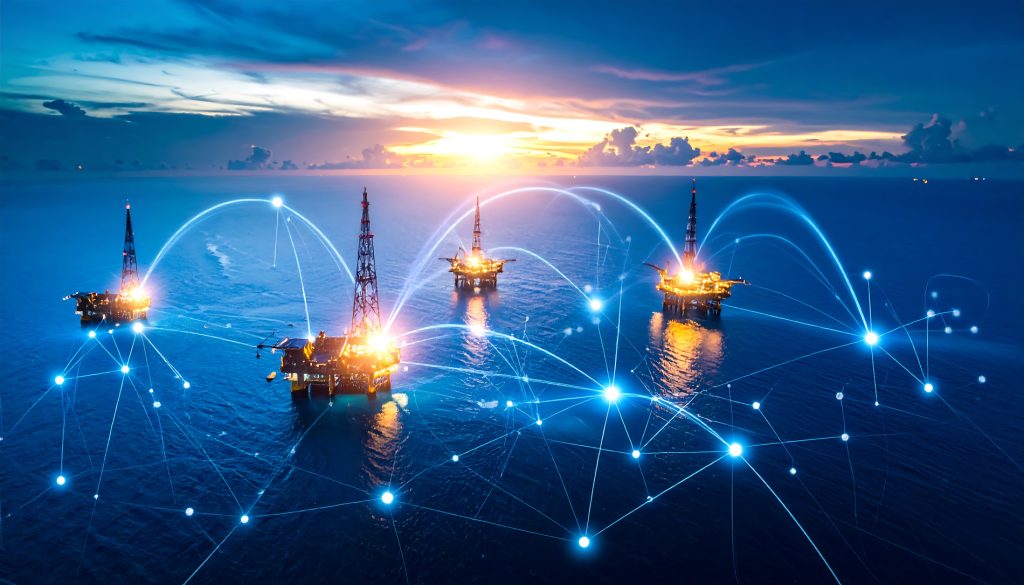
Looking ahead, large-scale interconnector and offshore wind projects are set to be a key driver of demand, particularly in the North Sea. One of the most significant developments is the agreement between the UK and nine other European countries to build a 100GW offshore grid, linking nations through subsea cables. This initiative, known as the Hamburg Declaration, aims to deliver enough electricity to power 143 million homes.
The 10 countries involved – UK, Belgium, Denmark, France, Germany, Iceland, Ireland, Luxembourg, the Netherlands, and Norway – have committed to building 5GW of offshore wind capacity every year between 2031 and 2040. This will be supported by private sector investment, with over 100 companies already backing the initiative. In addition to strengthening Europe’s energy security, the interconnector project is expected to create around 91,000 jobs and reduce reliance on volatile global energy markets.
This builds on earlier commitments by North Sea nations to deliver 300GW of offshore wind capacity by 2050. Notably, renewable energy is already gaining momentum, with wind and solar overtaking fossil fuels last year to generate 30% of the EU’s electricity.
As part of this transition, transmission grid operators are expected to identify around 20GW of viable cross-border projects by 2027. Many of these will involve “hybrid offshore projects,” where wind farms connect to multiple countries, improving efficiency and enabling energy exports.
What This Means for Geophysical & UXO Work
These developments will significantly increase demand for geophysical surveys and UXO (unexploded ordnance) operations. Every new cable route and offshore installation requires detailed seabed mapping, hazard identification, and risk mitigation; core areas where geoscience professionals play a critical role.
Key Projects to Watch
Alongside the ‘Hamburg Declaration,’ several major interconnector projects are already progressing and will contribute to this growing demand:
LionLink (UK-Netherlands):
One such example is LionLink, a first-of-its-kind electricity link between the UK and the Netherlands, being developed by The National Grid. At the moment, offshore wind farms and interconnectors operate separately, connecting to the shore individually. Offshore Hybrid Assets (OHA) allow clusters of offshore wind farms to connect all in one go, plugging into the energy systems of neighbouring countries. As an OHA, LionLink is a first of its kind technology, connecting an offshore wind farm to the shore and supplying more low-cost renewable energy into the system. The project is currently in the pre-application stage, with submission expected in late 2026. Construction could begin in 2028, with operations starting by 2032. Once complete, it will supply up to 2GW of electricity, enough to power around 2.5 million homes.
Eastern Green Link 1 (UK):
Eastern Green Link 1 is a 2GW high-voltage direct current subsea and onshore transmission link between Torness in Scotland and Hawthorn Pit in County Durham, England. Developed through a joint venture between SP Energy Networks and The National Grid, the project is a key component of the UK’s strategy to strengthen its electricity network and support the growth of renewable energy. Construction began in March 2025, with the link expected to be fully operational by 2029. Once complete, EGL1 will enable the efficient transfer of large volumes of renewable electricity, particularly offshore wind generated in Scotland, to areas of higher demand in England. This will not only help balance supply and demand across the grid but also reduce reliance on fossil fuels. With the capacity to power up to two million homes, the project will play an important role in improving energy security, which is particularly important in the context of ongoing global uncertainty.
Looking Ahead
There is no doubt that Europe’s push for energy security and renewable power will lead to a steady pipeline of interconnector and offshore wind projects over the next decade. While the current slowdown may present short-term challenges, the long-term outlook is highly positive.
For geophysical and UXO professionals, this means increased opportunities as projects move from planning into execution. The next wave is coming, and it will require the expertise and experience that freelancers bring to the industry.
Related News

Scientists Discover Over 1,000 New Ocean Species: What Does It Tell Us About the Seabed?
The ocean covers more than 70% of the Earth’s surface, yet much of what lies beneath it remains a mystery. In 2025,…
DEEP: The Company Building Deepwater Settlements for Human Habitation by 2027
What if the next frontier for human exploration isn’t space, but the ocean? That is the question behind DEEP, a UK-based ocean…